Published in The West Australian Newspaper, Monday 20 July 2026
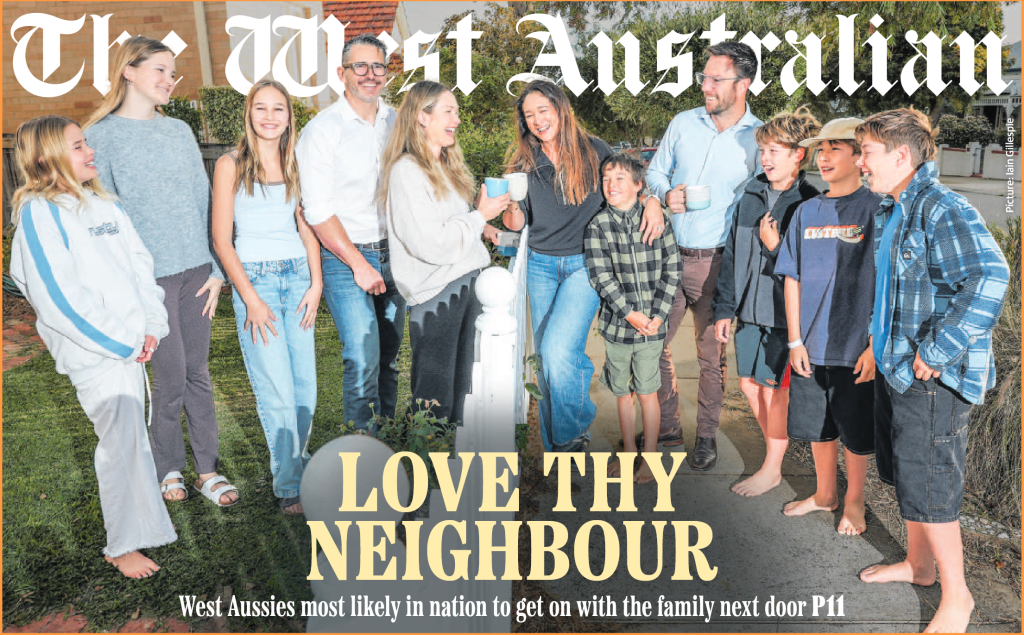
LOVE THY NEIGHBOUR
West Aussies most likely to get along with the family next door
Amy Cavender
East Fremantle couple Nikki and David are such good friends with their next-door neighbours they celebrate Christmas together, are emergency contacts for each others’ kids and even say they wouldn’t sell their homes because they’d never want to break apart.
And fresh data shows they certainly aren’t alone.
Research shows West Australians are more likely to have a good relationship with their neighbours than anywhere else in the country, with about two-thirds saying they love where they live.
The survey by insurer Youi shows 60 per cent of West Australians are positive about the quality of their neighbourhood, based on factors such as how often they acknowledge each other, respect boundaries and noise, park correctly and control their pets.
The report showed one in four West Aussies did not have a single horror story to tell about any area they’d lived in, which was also the lowest in the nation.
This rings true for Nikki and David Edge and their neighbours Annie and Mark Wilson, who have lived next to each other in a quiet East Fremantle street for the past 12 years.
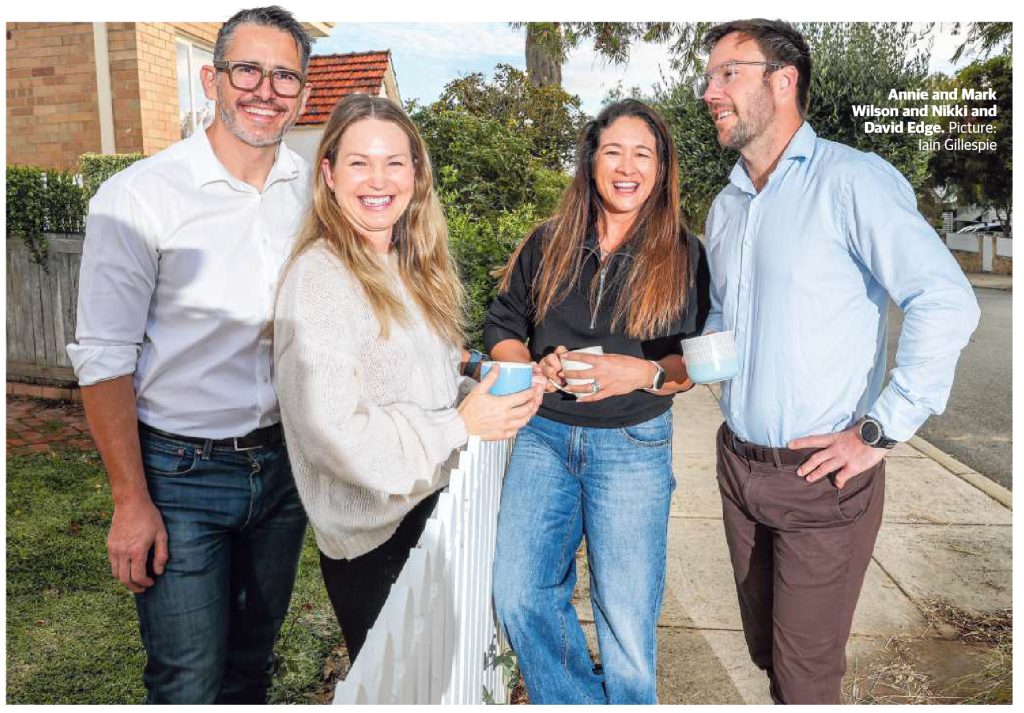
Mrs Edge, who is originally from Adelaide, has raised her four boys alongside Mrs Wilson’s three daughters and said the children were forever moving between the two homes, grabbing snacks, playing together and treating each house as their own.
Mrs Wilson’s daughters even call her “aunty”, and her boys have their neighbour as their emergency contact at school.
“Having good neighbours impacts our life in every way, I don’t know if I would have stayed in Perth had I not found a community like this,” she said.
“Especially when the kids were young and you don’t have all of those people around you with family being away, we both know how it feels to not be able to just drop your kids with the grandparents, we were just there for each other.”
Mrs Wilson, a nurse at St John of God Murdoch whose family have all left the State, said she was thrilled when the Edges moved in.
“I’m from WA but all my family moved interstate, so having family like Nikki and Dave who have become literally our best friends has completely filled that void,” she said. “We don’t notice that no family live around us because we have them instead and it’s just become super easy and natural and great fun for our kids to grow up together.”
The families have grown so close that Mrs Edge even told Mrs Wilson she was pregnant with her fourth son before telling her own husband.
“We were on par there for a while with three girls and three boys and then Nikki told me she thought she was pregnant again,” Mrs Wilson said.
“And I was like, really? I literally watched Dave pull up into the driveway that day and I was like, ‘Oh my gosh, she’s told him, I’ve got to walk away but I can’t’.”
Mrs Wilson — who owns her prime block in East Fremantle — said she had received offers from real estates to double their money by selling their home but would not move away from their family friends.
“It’s because of this community that we would never move away from here,” she said.
“We’ve had offers from real estate saying we could double our money but we say ‘no thank you’. It really is priceless what we’ve got here.
“Don’t be afraid to strike up a conversation because you never know when someone might be in the same boat and might just need a friend.”
Urban Development Institute chief executive Tanya Steinbeck said stories like the Edges and Wilsons were common in WA, which was known for a strong suburban culture of quiet residential streets, access to parks and outdoor lifestyle.
“The classic verge is more than just a leftover road reserve. In a lot of suburbs, it becomes a place for street trees, for shade, kids playing, you know, having a chat with your neighbours, and can be part of a distinct local identity and character,” Ms Steinbeck said.
“Design can’t force people to connect, but it can make connection easier, natural and more enjoyable. So I think the best neighbourhoods are those where people feel safe to walk and to linger and to participate and feel like they belong.”
Perth-based community strategist Sarah Janali said every strong neighbourhood relied on “super connectors” — the people who put time into bringing others together and helping create a sense of community.
“Super connectors in neighbourhoods are those people in your street that really actively welcome others, foster connections, the ones that are out there organising the Halloween parties and that sort of thing,” Ms Janali said.
“It’s about looking at how can you can foster more of those and support and enable those people that are doing that informal work of building community.”
Ms Janali said it was the residents who made the biggest difference by investing time in the people around them.
“Small acts can make a big difference for people,” she said.
“It does all start from getting to know your neighbours. Sometimes that means being proactive in reaching out.”
The Youi study — which surveyed 2000 residents across the country — found West Australians valued considerate neighbours, with 40 per cent saying weekday noise should stop after 9pm and 40 per cent saying their neighbours never ignored neighbourhood rules, which was the highest result nationally.
The study also found Sandgropers were more likely to see returning borrowed items as an unwritten neighbourhood rule.
Loud partyers were the least preferred neighbours nationally, while WA recorded the most people who considered their neighbours close friends, at 10 per cent.